
What it controls
Intelligence is a fact that has been confirmed and can be known by a character. A clue is evidence; intelligence is the explanation or confirmation that follows. The example is The Sender Has Not Left the Harbor. It appears only after the salt mark and the recent delivery record are confirmed.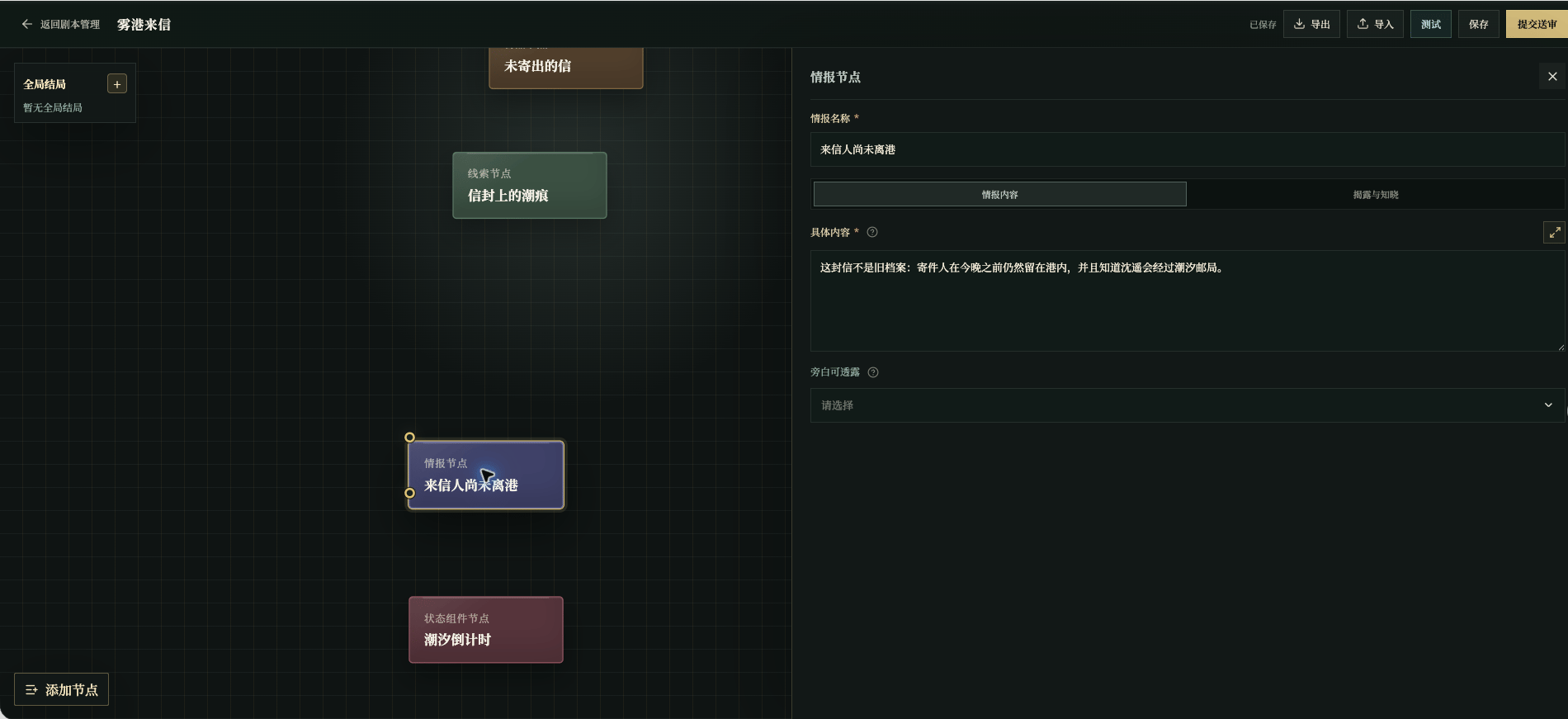
Chinese UI screenshot: intelligence fields
Content
The content becomes a fact the player can know, but it is not shown as soon as the node is created. It appears in the intelligence menu only after the reveal condition holds and the fact enters the current story state.
Reveal and knowing
Do not select every character as a knower. What a character knows directly shapes what they can say, what they hide, and who the player gets the answer from.
Build the chain
- Write the evidence the player observes first as a clue;
- Define the confirmed fact here and set its reveal timing;
- Bind the characters who already know it, so later dialogue and actions have a basis.
Required fields: intelligence name and content, plus a single reveal act. Missing values block testing and review; see Required Fields and Blockers.
Check it
- The content states a fact that is already true;
- The reveal act exists and is connected to the main route;
- The reveal condition can be reached through player actions or story events;
- Only characters who really know the fact are bound;
- A test confirmed the fact does not appear before the reveal, can be reviewed afterward, and is not spoken early by a character.